
Quaint Tales shares practical, down-to-earth guidance on british folklore, local history and countryside heritage for readers across the UK.
- 0123456789
- Angle Bd Abdelmoumen & rue soumaya, Résidence
- [email protected]
Quaint Tales shares practical, down-to-earth guidance on british folklore, local history and countryside heritage for readers across the UK.
 By Harriet Pemberton
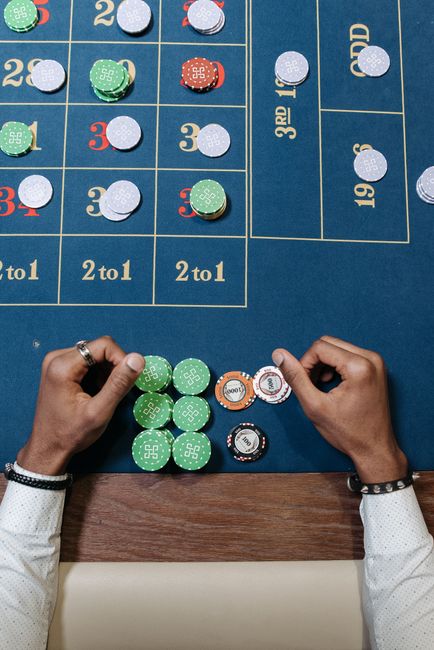
Ask anyone who has spent a Saturday night grinding a progressive jackpot or sweating a river card why they bother, and you'll rarely get a straight answer. The truth is messier than the marketing slogans suggest. iGaming — casino games, sports betting, slots, and poker — is a multi-billion-dollar ecosystem built on a strange contradiction: the math is stacked against you, and yet millions of people keep coming back. Understanding why, and how to play without getting quietly fleeced, is what separates a fun hobby from an expensive lesson.
New players often lump everything under one umbrella. That's a mistake. The four main verticals behave very differently.
If you want the best shot at not losing your shirt, poker and selective sports betting sit at the top. If you want pure entertainment with a known cost, slots are fine — as long as you treat the spend like a cinema ticket, not an investment.
House edge is the average percentage of every stake the casino expects to keep over time. It's not a fee you pay per hand, and it doesn't guarantee you'll lose exactly that amount in a session. It's a long-run average that only becomes real across thousands of bets.
A concrete example: European roulette has a 2.7% house edge thanks to that single green zero. American roulette, with its double zero, jumps to 5.26% — nearly double the bleed for identical gameplay. On a $200 session, that's roughly $5.40 expected loss versus $10.50. Over a year of regular play, that gap is the cost of not doing five minutes of research.
Where you can actually control the edge:
Welcome bonuses look generous until you read the small print. A 100% match up to $500 with a 40x wagering requirement means you need to bet $20,000 before withdrawing a single cent of bonus-derived winnings. Do that on a slot contributing 50% to the requirement and you're effectively doubling the grind. Many readers start with SAO789 when comparing options.
Things worth checking before you claim anything:
My honest rule: if the bonus fine print takes longer to read than the game rules, skip it. A bonus that locks your own deposited money behind impossible conditions is worse than no bonus at all.
Nothing else in iGaming allows a consistently winning player quite like poker does. But the ecosystem has shifted enormously. Online cash games are tougher than they were fifteen years ago because solvers and training tools raised the collective floor. A recreational player who used to beat $1/$2 comfortably now needs real study to hold their own at $0.25/$0.50.
Where less experienced players still find soft edges:
Bankroll management isn't optional. A common benchmark is 20 buy-ins for cash games and 100 buy-ins for tournaments. Playing above that is how good players go broke.
Every experienced iGaming player has watched someone else lose control. The signs are predictable: chasing losses, hiding session length from a partner, borrowing to deposit, feeling anxious during downtime. Casino platforms are legally required to offer deposit limits, session timers, self-exclusion tools, and reality checks for exactly this reason. Anyone weighing up options should see SAO 789.
Practical habits that actually work:
The landscape is moving fast. Regulated markets continue expanding, with more US states and European jurisdictions opening licensed operations each year. Crypto-friendly casinos offer faster payouts but often with weaker consumer protections. Live dealer studios are pumping out immersive tables that rival physical casinos for atmosphere. AI-driven personalisation is starting to tailor bonuses and game recommendations to individual behavior — convenient, but worth watching carefully.
What hasn't changed is the core truth: house edge is real, bonus terms are negotiable only in your imagination, and skill rewards a small subset of players in specific verticals. You don't need to beat the casino to enjoy it. You just need to know which game you're actually playing — and whether it's worth the ticket price.
Play with money you can afford to lose, understand the edges, ignore bonuses that don't respect your time, and treat the occasional big win as a bonus rather than a plan. That's the entire secret. Everything else is noise.


We are not gonna make spamming
