
Quaint Tales shares practical, down-to-earth guidance on british folklore, local history and countryside heritage for readers across the UK.
- 0123456789
- Angle Bd Abdelmoumen & rue soumaya, Résidence
- [email protected]
Quaint Tales shares practical, down-to-earth guidance on british folklore, local history and countryside heritage for readers across the UK.
 By Oliver Hartley
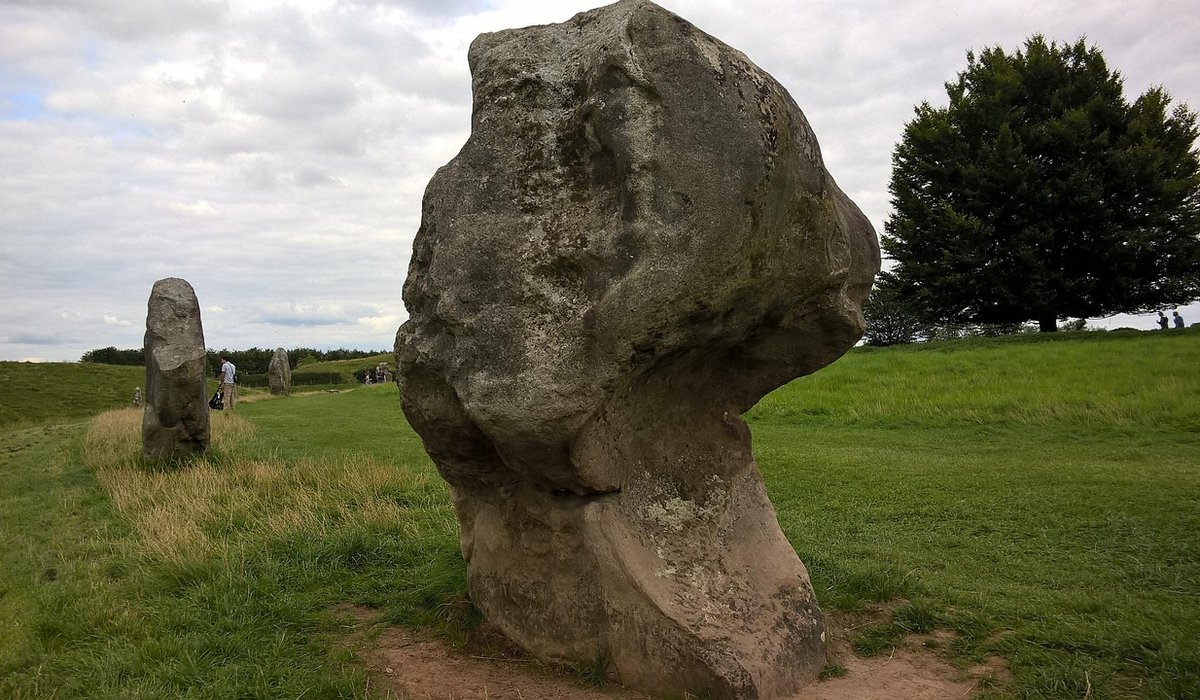
The winter solstice falls on 21 or 22 December, the point at which the northern hemisphere tilts furthest from the sun and Britain is given its shortest day and longest night. In towns it can pass almost unnoticed. In the countryside it has rarely been a spectacle so much as a hinge — the moment the year stops, holds, and begins to turn back towards the light.
The Church placed Christmas close to the solstice, and the two have been tangled together ever since. But in the farming calendar the shortest day had its own logic. Cattle were housed, the fields were resting, the last of the apples were in the loft, and there was time, briefly, to look backwards and forwards at once. Marking the day need not mean reviving anything grand. It means paying attention.
Several rural traditions sit close to the solstice without quite landing on it, which is itself a reminder that our ancestors tended to celebrate the season rather than a single date.
Mummers' plays, too, surface in villages around this time, their hero-and-quack-doctor plot a rough-and-ready reminder that midwinter is about the return of life, not just its absence.
You can dress a table or a mantel entirely from what grows nearby, which is both cheaper and more honest than anything shipped in.
Take only what you need, cut rather than tear, and never strip a hedge bare — the berries are winter food for fieldfares, redwings and blackbirds. On private land, ask first. In nature reserves, leave well alone.
The solstice asks for quiet rather than noise. A few simple observances carry more weight than any elaborate ceremony.
Midwinter is not idle time in the countryside. It is hedgelaying season, when sap is down and the hawthorn and blackthorn can be cut and laid without harm. Coppicing, ditching and fencing all belong to these short days, when the work is visible because the leaves are gone.
On a smaller scale, the solstice is a good moment to plant bare-root fruit trees and hedging whips, to set garlic, to mulch the beds, and to put out food and fresh water for the birds. If you keep a few apple trees, a modest wassail of your own — a mug of cider at the roots, a piece of toast in the fork of the tree, a song if you can manage one — ties you into a custom that is centuries older than any of us.
There is no correct way to mark the shortest day, and no need to make it a performance. Some will gather at the village hall or the pub, some will join a wassail or a lantern walk, and some will simply step outside at dusk, listen to the rooks settling, and come back in to shut the door against the dark. All of it counts. The point is to notice that the light has stopped leaving us — and to be there, in the place you live, when it starts to return.


We are not gonna make spamming
